Shopping for clothes when you’re petite can feel like an exercise in compromise. The jeans fit at the waist but drag on the floor. The blazer looks fabulous on the hanger but hangs halfway to your knees. And that cute midi dress? It’s practically a maxi.
At a glance
- Understanding petite sizing can help you make better shopping decisions.
- Proportions, fit, and styling matter more than traditional petite fashion rules.
- A versatile petite wardrobe starts with the right essentials and a few reliable retailers.
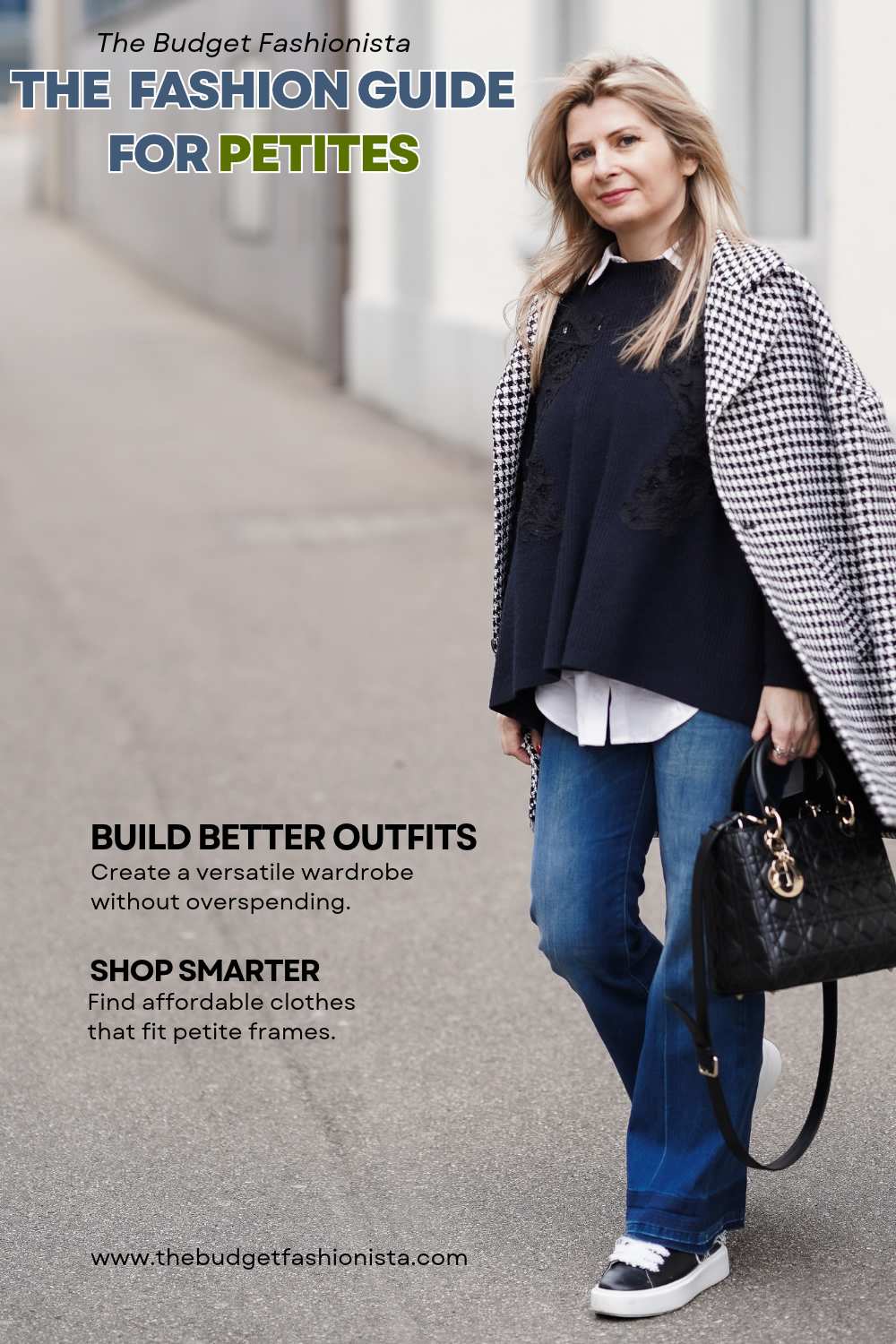
The good news is that you don’t need to limit yourself to certain styles, spend a fortune on alterations, or wear heels every day. You do need to understand how clothing proportions work with your body. That knowledge can help you shop more efficiently, build better outfits, and spend less on clothes you rarely wear.
What does petite mean in women’s fashion?
In women’s fashion, petite generally refers to women who are 5 feet, 4 inches tall or shorter. It describes height and proportions, not weight or body shape. You can be petite and curvy, athletic, slim, or plus-size.
Petite clothing is designed around a shorter frame. Depending on the garment and manufacturer, that can mean adjustments to:
- Sleeve and inseam lengths.
- Shoulder width.
- Armhole placement.
- Waist and bust positioning.
- Rise and knee placement on pants.
- Pocket size and positioning.
- Overall garment length.
These adjustments explain why a petite garment may fit you better than a regular-size garment that’s simply been shortened.
Of course, not all short women have the same proportions. You might have relatively long legs and a short torso, for example. In that case, petite tops and regular-size pants could be your best combination.
Think of petite sizing as another shopping tool rather than a category you have to stay within.
Understand your petite proportions
Before you invest in new clothes, take a few minutes to understand how your body is proportioned. This is more useful than memorizing a list of styles short women supposedly shouldn’t wear.
Torso length
If waist seams on dresses consistently land below your natural waist, you may have a relatively short torso. You might also find that high-rise pants sit uncomfortably close to your rib cage.
Midrise pants, petite-size dresses, and tops with carefully positioned waist seams may work better for you.
If you have a longer torso relative to your legs, higher-rise pants and shorter tops can create a different visual balance.
Leg length
Your overall height doesn’t necessarily tell you how long your legs are. Two women who are both 5 feet, 2 inches tall may need different pant inseams.
Measure the inseam of your best-fitting jeans and trousers. Keep those measurements handy when you’re shopping online, along with your preferred inseams for cropped pants.
Shoulder width
Shoulder fit is particularly important when you’re shopping for jackets, coats, and structured tops. A garment that’s too wide through the shoulders can look oversized even if the sleeves and hemline are the right length.
Unless you’re intentionally wearing a dropped-shoulder style, look for shoulder seams that sit near the outer edges of your shoulders.
Natural waist
Your natural waist is a useful reference point for evaluating the fit of dresses, jackets, and high-rise pants. You don’t necessarily need to emphasize your waist in every outfit, but knowing where it sits helps you understand why some garments feel better proportioned than others.
8 petite fashion tips that actually work
The best petite styling techniques give you more options, not fewer. Use these tips to troubleshoot outfits rather than as rules you must follow every day.
1. Prioritize fit over size labels
A size 6 petite from one retailer may fit differently from a size 6 petite at another. You may also wear different sizes in tops and bottoms.
When you’re trying something on, evaluate the garment rather than the number on the tag. Can you move comfortably? Do the seams sit where they’re supposed to? Does the fabric pull, bunch, or sag?
Good fit can make an inexpensive garment look considerably more polished.
2. Create a continuous visual line
Wearing similar colors from head to toe can encourage the eye to travel vertically. You don’t have to wear an exact color match to achieve this effect.
Cream trousers, a beige sweater, and tan shoes can work together beautifully. So can black jeans, a charcoal top, and black boots. See my guide to styling all-black outfits for more ideas.
This technique is especially useful when you’re experimenting with fuller silhouettes, longer garments, or unusual hemlines.
3. Experiment with your waistline
Higher-rise pants can visually lengthen your legs, while lower rises can give the appearance of a longer torso. Neither is universally better for petite women.
Try different rises with tucked-in tops and shorter sweaters. Notice how moving the visible waistline changes the overall balance of your outfit. You can experiment with this technique using clothes you already own.
4. Balance garment volume
You don’t have to wear fitted clothes exclusively because you’re short. Oversized sweaters, wide-leg pants, and relaxed blazers can all work on a petite frame.
Start by balancing one fuller garment with something more streamlined. Wear wide-leg trousers with a fitted knit, for example, or an oversized sweater with straight-leg jeans.
Once you’re comfortable with those combinations, experiment with volume on both your upper and lower body. A visible waistline, exposed wrists, or an open neckline can provide enough structure to bring the outfit together.
5. Be intentional about hemlines
Hemlines create visual stopping points. Moving a skirt or pant hem up or down by an inch can sometimes change the look of an entire outfit.
When a garment feels awkward, temporarily fold the hem to different lengths and evaluate it in a full-length mirror. Wear the shoes you intend to pair with the garment so you can see the complete effect. This is particularly useful with midi skirts, cropped pants, and longer jackets.
6. Choose prints and accessories thoughtfully
You’ve probably heard that petite women should avoid large prints and oversized accessories. That’s an oversimplification.
A large floral print can look amazing on a simple dress. A substantial handbag can add personality to an otherwise understated outfit. The question is whether those elements complement the overall look or compete with everything else you’re wearing. If you love statement pieces, try giving one of them the spotlight rather than layering several together.
7. Use shoes as a styling tool
Heels can add height, but they aren’t your only option. The shape, color, and coverage of your shoes can influence how your legs look.
Pointed-toe flats, low-vamp ballet flats, and shoes that coordinate with your pants or tights can create a relatively uninterrupted visual line. Low-profile sneakers are another easy option, particularly with jeans and cropped trousers. Wear heels because you enjoy the look, not because you feel obligated to compensate for your height.
8. Know when tailoring is worth it
A good tailor can transform a garment that almost fits into one you reach for regularly. Shortening pants, adjusting sleeves, and taking in a waistband are common alterations that can make a meaningful difference.
More complicated changes, such as narrowing jacket shoulders or repositioning armholes, may be expensive enough to negate the savings on a budget garment. Get a quote before committing to a purchase that needs substantial work.
How to choose petite jeans and pants
Pants can be one of the more frustrating categories to shop when you’re petite. Length is the obvious challenge, but the positioning of the knee, rise, and pockets also matters.
Jeans
Straight-leg jeans are a useful starting point because they work with many shoe styles and are relatively straightforward to hem. Slim jeans, flares, bootcut jeans, and wide-leg styles are also worth trying.
With flared and bootcut jeans, pay particular attention to where the leg begins to widen. If that point sits too low, shortening the jeans won’t necessarily correct the proportions.
Start your search with my guide to the best jeans brands for petites.
Cropped pants and capris
Cropped pants aren’t off-limits for petite women. The right hemline, rise, and footwear can make these styles surprisingly versatile.
Try ankle-length crops if you’re new to the silhouette. For shorter capris, experiment with hemlines that land below the widest part of your calf.
My guide to wearing cropped pants if you’re petite covers seven ways to make this silhouette work. You can also explore my year-round capri pants outfit guide for seasonal styling inspiration.
Wide-leg trousers
Wide-leg pants can create a beautiful, flowing silhouette on a petite frame. Look for a pair that fits neatly through the waist and hips before widening through the leg.
For full-length styles, choose a hemline that nearly reaches the floor when you’re wearing your intended shoes, without dragging. For cropped styles, an ankle-grazing length is an easy place to start.
Work trousers
Petite-size tailored trousers can be a worthwhile investment, especially if you wear business-casual clothes regularly.
Look for a comfortable waistband, a clean fit through the hips, and a leg shape that works with at least two pairs of shoes you own. Black, navy, charcoal, and neutral brown are versatile options, though your best choice depends on the colors already in your wardrobe.
How to choose petite dresses and skirts
Dresses and skirts offer plenty of styling flexibility. The challenge is finding garments with waist seams, necklines, and hemlines that sit where you want them to.
Mini dresses and skirts
Mini lengths can be particularly easy to style on a petite frame. They expose more of the leg and pair nicely with flats, sneakers, boots, and heels.
Check the actual length, though. A regular-size mini may land close to your knee, while a petite version may produce the shorter silhouette you intended.
Midi dresses and skirts
Midi lengths deserve a place in your petite wardrobe. A fluid midi skirt with a tucked-in top can look sophisticated without feeling overwhelming.
Experiment with hemlines that fall below the widest part of your calf. If the skirt has substantial volume, try a more streamlined top or a shorter jacket.
A slit, wrap design, or asymmetric hem can also introduce movement and break up a large expanse of fabric.
Maxi dresses
A maxi dress can create a long, continuous silhouette, making it a surprisingly natural choice for petite women.
Look for a waistline that sits comfortably, manageable fabric volume, and a hemline that doesn’t drag. Adjustable straps can be helpful if you often find that dress bodices are too long.
Read my guide to wearing maxi dresses if you’re petite for more specific styling advice.
Wrap and belted dresses
Wrap dresses offer some flexibility through the waist and bust, while belted dresses allow you to adjust where the outfit’s visual waistline sits.
These styles can be particularly useful if you’re between sizes or if standard dress proportions rarely work for you.
Check that the neckline, waist seam, and skirt length all work together. A belt can adjust the look of a dress, but it can’t correct every fit problem.
How to choose petite tops and sweaters
Petite tops often differ from regular-size tops in more ways than sleeve length. Neckline depth, armhole placement, and overall body length can all affect how a garment fits.
T-shirts and casual tops
A well-fitting tee is one of the hardest-working pieces in a petite wardrobe. Look for a neckline you enjoy wearing and a hemline that works with your favorite pants.
A regular-size cropped tee may function as a standard-length top on a shorter torso. That’s one reason not to limit your shopping to petite departments.
Blouses
When you’re shopping for blouses, check the shoulder seams, bust positioning, and sleeve length. Button-down styles should sit comfortably across your chest without pulling or gaping.
If you frequently tuck your blouses into trousers, look for fabrics that aren’t so bulky that they bunch around your waist.
Sweaters
With sweaters, the combination of length, thickness, and volume is particularly important. A chunky knit that’s also very long can dominate an outfit, while a shorter chunky knit may be easier to balance.
Fine-knit sweaters are useful layering pieces because they fit comfortably under jackets and can be tucked into pants without adding excessive bulk.
For more guidance, see my article on sweaters for petite women.
How to choose petite jackets and coats
Outerwear is one category where petite sizing can make a significant difference. Shortening the sleeves on a regular-size coat doesn’t fix a waist seam that sits too low or pockets you can barely reach.
Blazers
A blazer should fit comfortably through your shoulders and allow you to move your arms. Check the button placement, sleeve length, and overall hemline, too.
Shorter blazers work particularly well with high-rise pants and fuller skirts. Longer blazers can look equally stylish, especially when worn open over a streamlined outfit.
Casual jackets
Denim jackets, moto jackets, and utility jackets are versatile additions to a petite wardrobe. Try different lengths to see how they interact with your favorite pants and dresses.
A jacket that ends near your waist creates a different silhouette from one that lands at your hips. Having both options can expand your outfit repertoire.
See my guide to jackets for petite women for more ideas.
Winter coats
Long coats can look fabulous on petite women. The key is finding one with the right shoulder fit, sleeve length, and overall structure.
A belted wool coat can provide waist definition, while a straight-cut coat can create a clean vertical line. With puffers, consider how the thickness and quilting interact with the rest of your outfit.
For more cold-weather advice, read my guide to winter dressing for petites.
Petite fashion tips for curvy and plus-size women
Being petite doesn’t mean being small in every dimension. If you’re curvy or plus-size, you may find that regular petite collections don’t offer enough room through the bust, hips, or thighs.
Start with garments that fit comfortably at your fullest measurement. It’s generally easier to take in excess fabric than to create room where there isn’t any.
Stretch fabrics, adjustable waistlines, wrap designs, and garments available in multiple inseams can give you additional flexibility.
If you need to choose between regular plus-size clothing and a more limited petite plus-size selection, evaluate the alterations each garment would require. Shortening a straight-leg pant may be relatively simple, while repositioning the bust or waist of a dress may be more involved.
See my guide to petite plus-size dresses for additional shopping and styling strategies.
Where to shop for petite clothing
Finding a few retailers that consistently fit your proportions can save you considerable time, money, and frustration. Fortunately, you don’t need to rely on specialty petite stores or expensive designer brands. Many mainstream retailers offer petite collections, extended size ranges, and multiple inseam options.
I’d start by identifying two or three reliable brands for your everyday basics, then branch out when you’re shopping for something specific. Keep track of the sizes and cuts that work for you, especially when buying online.
For retailer recommendations, price comparisons, and advice on where to find everything from petite jeans to occasionwear, see my guide to the best online stores for petite clothing.
How to shop for petite clothes online
Online shopping can give you access to more petite clothing than you’ll find in many physical stores. It also requires a little more preparation.
Know your measurements
Keep a note on your phone with your bust, waist, hip, and preferred inseam measurements. It can also be helpful to record the sleeve and body lengths of tops and jackets that fit you particularly well.
Compare these numbers with the retailer’s size chart and garment measurements whenever they’re available.
Read reviews for fit information
Customer reviews can be particularly useful when shoppers share their height, usual size, and experience with a garment’s length.
Look for patterns across multiple reviews. One shopper’s complaint about a short inseam may be exactly the information you need to identify a pant that works for you.
Understand return policies
Petite sizes aren’t always stocked in physical stores, which can make exchanges less convenient. Check whether online purchases can be returned in store, whether return shipping is free, and whether clearance purchases are final sale.
A deeply discounted garment isn’t necessarily a good buy if you can’t return it and aren’t confident about the fit.
Shop by measurements, not just categories
Regular-size ankle pants, cropped tops, and three-quarter-sleeve jackets may work well on a petite frame. Some retailers also offer short inseams without labeling the garment as petite.
Use those options to expand your selection, particularly when you’re shopping for casual clothes.
When to tailor petite clothing
Tailoring is one of the most useful budget strategies for petite women, provided you choose the right garments to alter.
Here’s how I’d prioritize common alterations.
| Alteration | General complexity | What to consider |
|---|---|---|
| Shortening straight-leg pants | Low | Wear your intended shoes to the fitting |
| Shortening a simple skirt | Low | Check for lining, pleats, or decorative hems |
| Taking in a waistband | Low to moderate | Make sure the garment already fits through the hips |
| Shortening jacket sleeves | Moderate | Buttons, zippers, and lining can add complexity |
| Adjusting dress straps | Low to moderate | Check how the change affects the neckline and bust |
| Moving a dress waist seam | High | Consider buying a petite version instead |
| Narrowing jacket shoulders | High | Often impractical for inexpensive garments |
When you’re evaluating an alteration, consider the garment’s total price and how frequently you’ll wear it. Spending extra to perfect a pair of trousers you wear weekly can make more financial sense than buying several inexpensive pairs that never fit quite right.
My guide to cost per wear can help you evaluate those decisions.
12 petite wardrobe essentials
A functional petite wardrobe doesn’t require dozens of specially sized garments. Start with pieces that fit your lifestyle and work together in multiple combinations.
| Wardrobe essential | What to look for |
|---|---|
| Straight-leg jeans | Correct inseam and knee placement |
| Tailored trousers | Comfortable rise and clean fit through the hips |
| Cropped pants | Intentional hemline and versatile leg shape |
| Basic tee | Good shoulder fit and manageable length |
| Button-down blouse | Comfortable bust fit and sleeve length |
| Fine-knit sweater | Easy layering and minimal bulk |
| Casual jacket | A length that complements your favorite pants |
| Tailored blazer | Proper shoulder fit and button placement |
| Everyday dress | Well-positioned waist seam and neckline |
| Versatile skirt | Hemline that works with several shoe styles |
| Pointed-toe flats | Comfortable fit and styling versatility |
| Everyday sneakers | A shape that complements your casual wardrobe |
You don’t need to buy everything on this list. Use it to identify gaps in your existing wardrobe and prioritize the pieces that would give you the most additional outfit options.
For a shorter shopping list, see my guide to five petite wardrobe essentials.
Petite outfit formulas for everyday life
When you’re short on time or inspiration, outfit formulas can help you assemble a polished look without overthinking every garment.
Casual weekend
Straight-leg jeans + tucked-in tee + short denim jacket + low-profile sneakers.
This combination works with pieces you probably already own. Swap the tee for a lightweight sweater when temperatures drop.
Business casual
High-rise or midrise trousers + tucked-in blouse + tailored blazer + pointed-toe flats.
Choose a trouser rise that feels comfortable on your torso. You can introduce color through the blouse, shoes, or handbag.
Dinner or date night
Wrap dress + low-heeled sandals or slingbacks + statement earrings.
The wrap silhouette gives you some flexibility through the waist, and a pair of comfortable shoes keeps the outfit practical.
For more inspiration, explore these date night outfits for petites.
Summer casual
Wide-leg cropped pants + fitted tank + flat sandals + woven handbag.
The streamlined top balances the fuller pant leg, while the sandals keep the outfit relaxed and comfortable.
Cold-weather casual
Straight-leg jeans + fine-knit sweater + long wool coat + ankle boots.
Try coordinating the color of your jeans and boots if you want a more continuous visual line. An open coat can also create a strong vertical element when the weather allows.
7 outdated petite fashion rules you can ignore
Much of the traditional advice for short women revolves around looking taller and slimmer. There’s nothing wrong with wanting either effect, but neither needs to be your primary fashion objective.
| Old rule | What to do instead |
|---|---|
| Always wear heels | Choose shoes that complement your outfit and lifestyle. |
| Never wear cropped pants | Experiment with hemline, rise, and footwear. |
| Avoid maxi dresses | Look for suitable length and waist placement. |
| Stick to small prints | Balance statement prints with simpler pieces. |
| Never wear oversized clothes | Manage volume through fit, structure, and layering. |
| Wear only one color | Use color and contrast to highlight features you enjoy. |
| Always shop petite departments | Shop wherever you find garments that fit. |
Understanding the visual effects of different styling choices gives you the freedom to decide when those effects matter to you.
Petite fashion FAQs
What height is considered petite?
Most U.S. women’s clothing retailers use petite sizing for women who are approximately 5 feet, 4 inches tall or shorter. Individual brands may use different height ranges and proportions when designing their collections.
Is petite the same as a short inseam?
No. A short inseam refers specifically to pant length. Petite sizing may also involve adjustments to the rise, knee placement, waist positioning, and other garment proportions.
Can you be petite and plus-size?
Absolutely. Petite describes height and proportions, while plus-size describes a clothing size range. The two categories aren’t mutually exclusive.
What clothes make petite women look taller?
Tonal outfits, higher-rise pants, full-length trousers, and garments with strong vertical lines can create the appearance of additional height. The effect depends on how those elements interact with your individual proportions.
Can petite women wear flats?
Yes. Pointed-toe flats, ballet flats, loafers, sandals, and sneakers can all work beautifully on a petite frame. You don’t need heels to create a balanced outfit.
Should petite women avoid wide-leg pants?
No. Look for wide-leg pants that fit comfortably through the waist and hips, with an appropriate hemline. Pairing them with a more streamlined top is an easy way to manage the volume.
Is petite clothing more expensive?
Not necessarily. Many mainstream retailers offer petite clothing at prices comparable to their regular-size collections. The bigger challenge may be finding enough selection, particularly when shopping sales or clearance.
Can petite women wear regular-size clothes?
Yes. Regular-size clothing may work particularly well if you have a longer torso, longer legs relative to your height, or proportions that differ from a retailer’s petite fit model. Evaluate each garment individually.
More petite fashion guides
Explore these Budget Fashionista guides for more targeted shopping and styling advice.
Pants and denim
Dresses and occasionwear
Tops and outerwear
Seasonal style
Shopping and wardrobe building
The Budget Fashionista takeaways
The best petite fashion advice I can offer is to stop treating your height as a styling problem. Your clothes should accommodate your body, not the other way around.
Learn your measurements, identify the proportions you enjoy wearing, and find a few reliable places to shop. Be selective about alterations and spend your fashion budget on garments that give you plenty of outfit options.
Once you’ve established that foundation, you can experiment with trends, colors, and silhouettes without wondering whether you’re tall enough to pull them off.
Comments are closed.