Petite Sophisticate was the fashion retail destination for small-sized women in the 1980s and 1990s. Alas, the chain shut down in the early 2000s — yet another retail victim of changing shopping habits in that era.
The retailer’s detailed history is hard to piece together, but here’s a broad look at what happened to the beloved Petite Sophisticate store chain.
Read next: The evolution of the budget fashion landscape, and what’s next
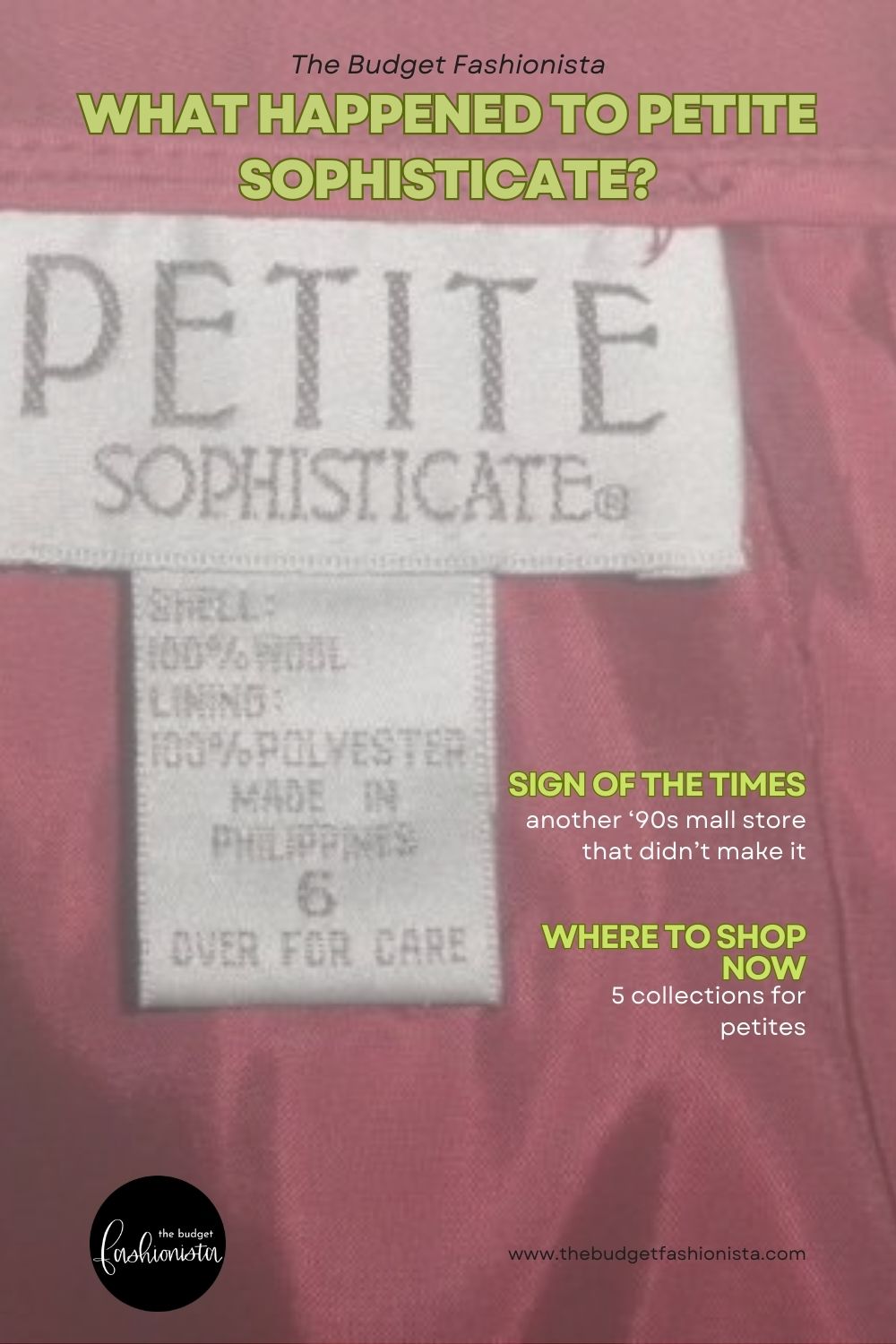
What we do know about Petite Sophisticate
Petite Sophisticate’s brief retail dominance, ownership structure, and closure have been well-documented.
Rise to prominence
Petite Sophisticate thrived for about a decade, starting in the early-mid 1980s. Those were the days when mall stores could survive on foot traffic from leisure shoppers. And once shorter ladies discovered Petite Sophisticate, they were hooked — at least for a time. They loved having access to true ready-to-wear garments, proportioned for their smaller frames.
According to Encyclopedia.com, the Petite Sophisticate chain grew to 450 stores between 1982 and 1995. The same article also references 300 stores in 2000.
In the late 1990s, Petite Sophisticate’s parent company experimented with different store formats, consolidated stores, and changed its merchandising strategy to be more trendy and less professional. These updates helped profitability in 1999, but were not enough to insulate Petite Sophisticate and its sister brands from ever-increasing competition.
Ownership
In its heyday, Petite Sophisticate was owned by Casual Corner, another retail chain. Casual Corner was owned by U.S. Shoe in the 1980s through the late 1990s. In the earlier half of the 1980s, U.S. Shoe moved Casual Corner, Petite Sophisticate, and other brands into a dedicated division called Women’s Specialty Retailing Group or WSRG.
In 1995, Italian eyewear manufacturer Luxottica purchased U.S. Shoe. The target was LensCrafters, another U.S. Shoe brand. Luxottica then quickly spun off the women’s retail brands, including Petite Sophisticate, into separate entity called Casual Corner Group, Inc. Casual Corner remained under the control of the Del Veccio family, which founded and owned Luxottica.
In 2001, the Del Veccios established Retail Brand Alliance or RBA as a holding company to house Casual Corner Group and other brands.
Shut down
RBA sold Casual Corner Group to liquidator Gordon Brothers Group in 2005. RBA President and CEO Claudio Del Vecchio said RBA’s long-term focus was on Brooks Brothers, another brand in its portfolio. Incidentally, Brooks Brothers remained under Del Vecchio’s control until it filed for Chapter 11 bankruptcy in 2020.
Just months the Gordon Brothers Group sale, Casual Corner Group announced it was closing all 525 stores in the U.S. and Puerto Rico, including all Petite Sophisticate locations.
Read next: What happened to Contempo Casuals?
What we don’t know about Petite Sophisticate
Available sources conflict on Petite Sophisticate’s founding date and original owner. Some sources, including an existing Petite Sophisticate ecommerce site, reference a founder named Saul Skurow of Cincinnati, Ohio and a launch date in 1950. Unfortunately, these details are not verifiable by any official reporting or corporate filings. Nor is Petite Sophisticate mentioned in an obituary for the Saul Skurow who passed away in Cincinnati in 2002 at age 76.
One Fred Skurow did work as a WSRB executive for U.S. Shoe, overseeing Casual Corner and Petite Sophisticate. Encyclopedia.com references Skurow’s role during Petite Sophisticate’s growth period. Are Fred and Saul related? Or the same person? If you know, send me an email and fill me in. I’d love to get this story straight.
Two other points remain in question:
- Purchase date. The same Encyclopedia.com article notes that Casual Corner purchased Petite Sophisticate in 1982. The seller is not identified and there’s no reference to a source that corroborates this date.
- Charming Shoppes connection. Other sources reference a connection between Petite Sophisticate and Charming Shoppes, Inc., a holding company that operated Fashion Bug and Lane Bryant. There is no reliable evidentiary support for this information either.
Why Petite Sophisticate disappeared
While there are no available financial reports for Petite Sophisticate or Casual Corner Group, one can assume there were profitability issues in the late 1990s and early 2000s. This was a time when many mall stores struggled to adjust to changing shopping patterns and more intense competition.
There was also a mild recession in the U.S. between March and November of 2001, but consumer spending remained resilient.
Coverage of the Casual Corner Group closure primarily cited competition as a primary factor. Petite Sophisticate and its sister brand struggled to compete with faster, trend‑driven retailers and failed to maintain relevance as shoppers moved away from the mall.
Read next: What happened to Wet Seal?
Where to shop petite fashion today
You can still shop original Petite Sophisticate garments on ThredUP, Poshmark, and eBay. Given the hype of Y2K fashion, these pieces are likely still wearable.
For modern, new styles that fit smaller proportions, try these stores:
You’ll notice these are collections rather than dedicated petite shops. Sadly, the focused petite store doesn’t thrive in today’s world, just as you don’t see as many dedicated plus-size shops or small-sized shops (remember 5-7-9?) as there used to be. There is simply too much competition in women’s retail, online and offline. Retailers favor integrated sizing to attract wider audiences.
You can find the broadest petite collections online, but lean on nearby store locations whenever possible. Store visits are helpful for testing size and fit, and for making free returns of online purchases when necessary.