The revival of padded shoulders, retina-burning neon hues and palazzo pants have sparked nostalgia for those halcyon days of the big-haired ‘80s. But as much fun as leg warmers are, we’ll never enjoy a full revival of ’80s style. I say so because one of the era’s biggest icons — Contempo Casuals — has gone the way of New Wave and huaraches.
Here’s the story of what happened to Contempo Casuals.
Read next: The evolution of the budget fashion landscape, and what’s next
A store for the ’80s
Contempo Casuals was a mid-priced store selling the latest styles we saw in the pages of our fav teen magazine Sassy. You may remember hitting up Contempo Casuals for jelly shoes, patterned jam pants, and other iconic looks duped from Madonna, Whitney, and Jesse Spano.
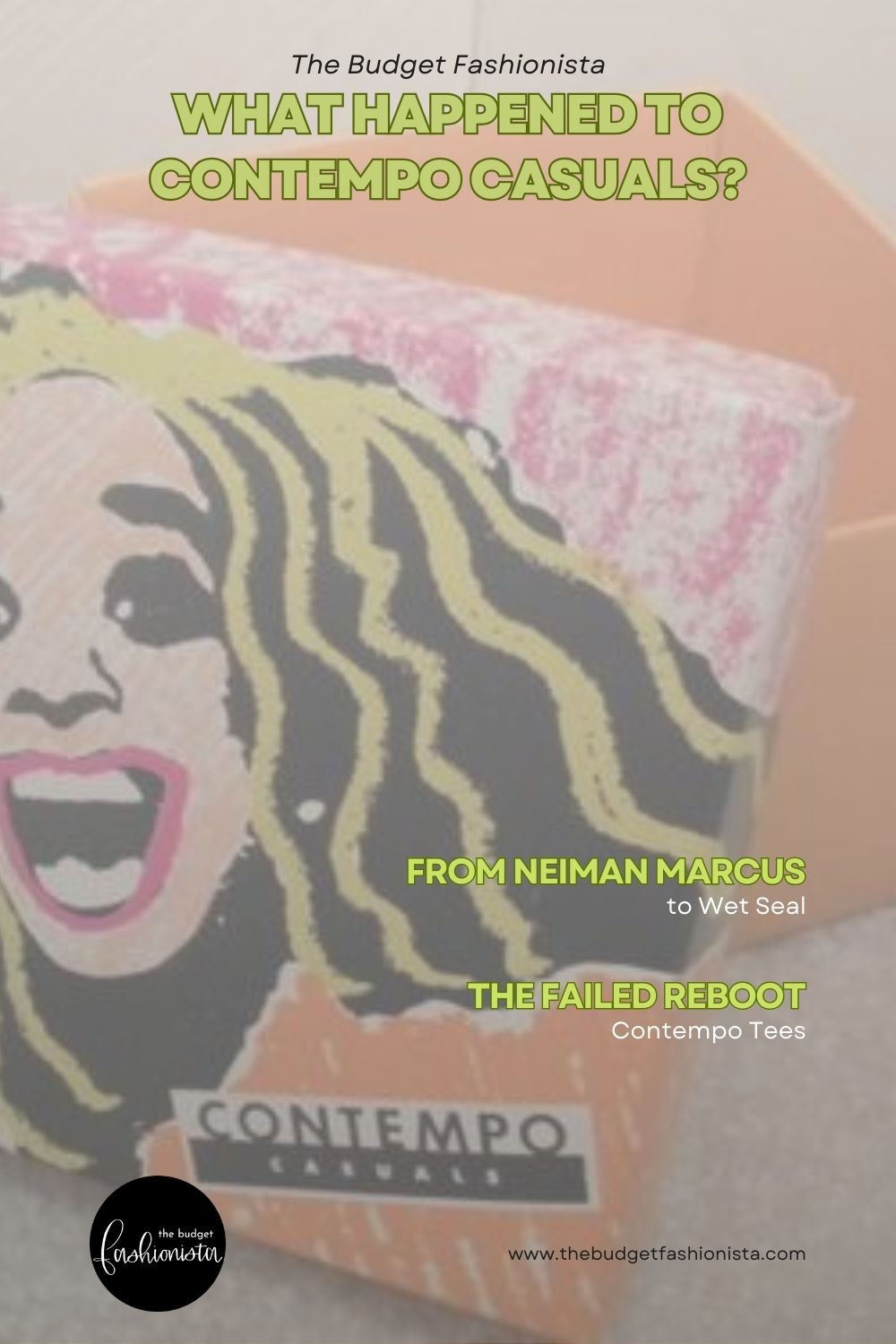
The store also had cool shopping bags with geometric line drawings and Andy Warhol-esque graphics.
A short history of Contempo Casuals
Contempo Casual found success under the guidance of an inexperienced husband-and-wife team, then collapsed under corporate ownership.
The Friedman era
Contempo Casuals was launched in the ’60s by husband-and-wife team Dottie and Wil Friedman. This resourceful couple spun a liquidated variety store called Bargain Town into a women’s clothing shop that specialized in fresh, hip styles. Dottie and Wil were not fashion experts, but they were passionate about delivering a different retail experience.
Most people would think it was a negative that we had no experience in retail or clothing, but I believe it was one of our biggest assets. What I mean is that for the most part many come out of department stores or such, and have a set of rules. We had zero rules. We did what we thought was right, not knowing that in many cases it wouldn’t be what the mainstream clothing people would do. We made many mistakes, but I was smart enough to acknowledge them and fix it.
Wil Friedman, co-founder, Contempo Casuals
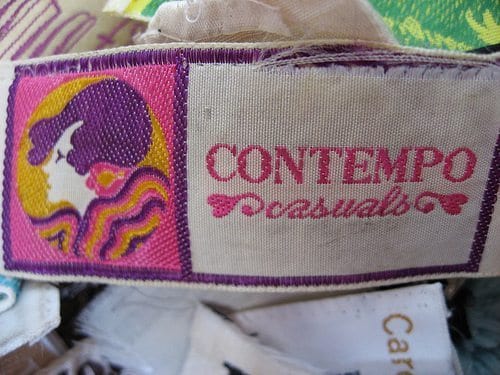
The Friedmans grew the brand from one Granada Hills store with pink walls and red carpet to a thriving chain. They promoted the brand with hand-drawn, avant-garde advertisements depicting high-fashion women, and it resonated. Between the mid-1960s and the late-1970s, Contempo Casuals became increasingly popular as a source for women’s trending styles.
Carter Hawley Hale and Neiman Marcus Group
The brand grew so quickly that it caught the attention of national chains, and the Friedmans sold Contempo Casuals to retail conglomerate Carter Hawley Hale Group in the late 1970s. Carter Hawley Hale (CHH) also owned Neiman Marcus, Bergdorf Goodman, and Waldenbooks.
CHH spun off a few of its retail brands to form Neiman Marcus Group in 1987. Contempo Casuals and its stores were part of that transaction. Neiman Marcus Group continued operating Contempo Casuals until 1995, but then sold the brand and its 237 stores to Wet Seal.
Wet Seal ownership
Under Wet Seal ownership, Contempo Casuals operated under its own name until the early 2000s. Wet Seal, facing troubles of its own, then converted the remaining Contempo stores to Wet Seals and Arden B. Those stores no longer exist today.
Celebrating Contempo Casuals today
If you’re still mourning the loss of the store that gave you the looks that made you think, “Not even Kim Cattrall’s mannequin could pull this off so well,” don’t fret, just turn to Facebook. Contempo fans can reminisce about the old days, which includes comparing notes om how many buttons could actually fit on a jean jacket.
A failed reboot, Contempo Tees
The Contempo name was briefly revived in a t-shirt line called Contempo Tees. That line was launched by Friedman’s grandson with the goal of finding a place in the streetwear market. The collection included t-shirts featuring the original hand-drawn illustrations that promoted Contempo Casuals all those years ago.
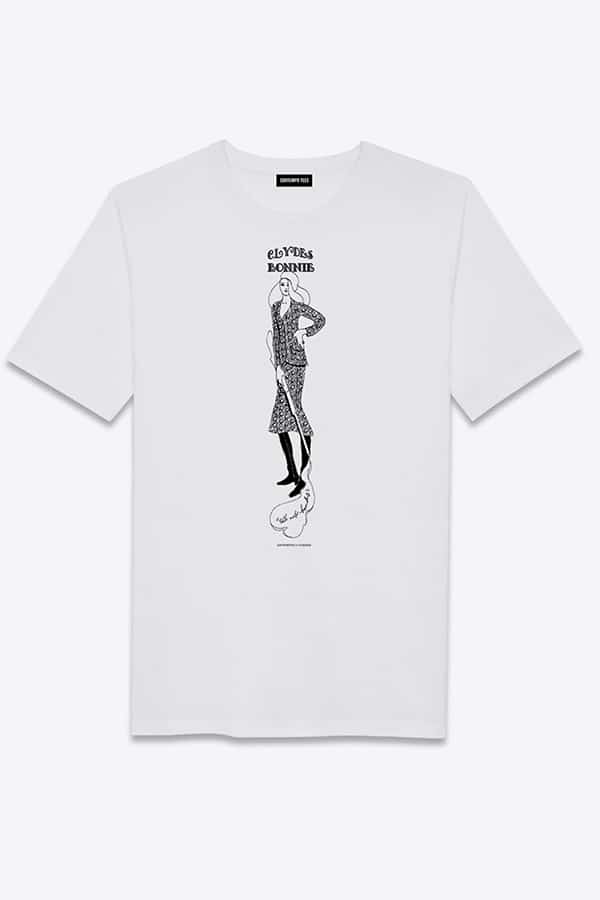
Sadly, the Contempo Tees website also appears to have run its course.
Why Contempo Casuals disappeared
Contempo Casuals did struggle to retain its relevance in the second half of the 1990s, as did other brands catering to the mall-rat teens. When hanging out at the mall become less popular, there were too many trendy teen shops fighting over a shrinking number of customers.
Wet Seal felt this pressure directly. The chain had problems of its own, and it didn’t need to compete with its sister brand for customers. Management made the decision to consolidate into one big retail chain rather than two smaller ones. Unfortunately, Wet Seal failed anyway, making the disappearance of Contempo Casuals just a sad piece of collateral damage.
Where to shop instead
If you miss Contempo Casuals, you may miss the vibe more than the clothes. You know, the loud music, glossy mannequins, and slightly too‑tight club tops. The sense that something new has arrived.
Today, that energy is scattered:
- Part of it lives at Pacsun and American Eagle Outfitters, where teens still browse racks with friends, trying on denim and crop tops under fluorescent mall lights.
- Part of it migrated to Zara and H&M, where the thrill comes from constant turnover. If you don’t buy it today, it’ll be done tomorrow.
- Part of it lives online, in resale marketplaces like Depop, where Gen Z hunts for Y2K pieces that look suspiciously like something you might have bought at Contempo in 1998.
The part that’s hardest to relive is the discovery. Contempo fans once discovered trends by wandering through the mall, touching clothes that hung on the rack. Today’s shoppers discover them on their phones, a decidedly less tactile experience.