Dresses are my favorite outfit cheat code. One piece delivers a complete look, but it’s a look you can mold to suit your mood, the weather, or an occasion. Cold outside? Add a cardigan. Headed somewhere casual? Swap the sandals for sneakers. A good dress that suits your lifestyle and coordinates with your wardrobe naturally has a low cost per wear because it’s so versatile.
Learn how to find those high-value dresses with this guide. We break down common dress lengths and silhouettes and how they’re used, so you can shop smarter. The end game? You’ll have a collection of dresses you wear on repeat plus less buyer’s remorse, more cash in your pocket, and fewer “worn-once” pieces taking up space in your closet.
Start here: How to pick the right dress for you
Use these four easy guidelines to up-level your dress shopping right now.
- Midi dresses are versatile. A midi dress in a solid neutral like black, navy, or olive is a value-rich buy when your lifestyle goes from business to casual to date night to cocktail party.
- T-shirt dresses are the casual girl’s uniform. If your lifestyle is mostly casual, a high-quality, t-shirt shift dress is a great buy. Dress it up or down and change up the look with accessories or maximum cost per wear.
- Knits, smocked waists, and wrap dresses are comfortable. If you hate feeling pinched in the waist or caged by too much structure, knits, smocked waist dresses, and wrap dresses are for you.
- Wrap dresses, structured A-line dresses, and sheath dresses have a polished vibe that delivers instant style. You can let these dress styles do the work for you.
If you live in a warm-weather climate, see: 10 essential summer dress styles.
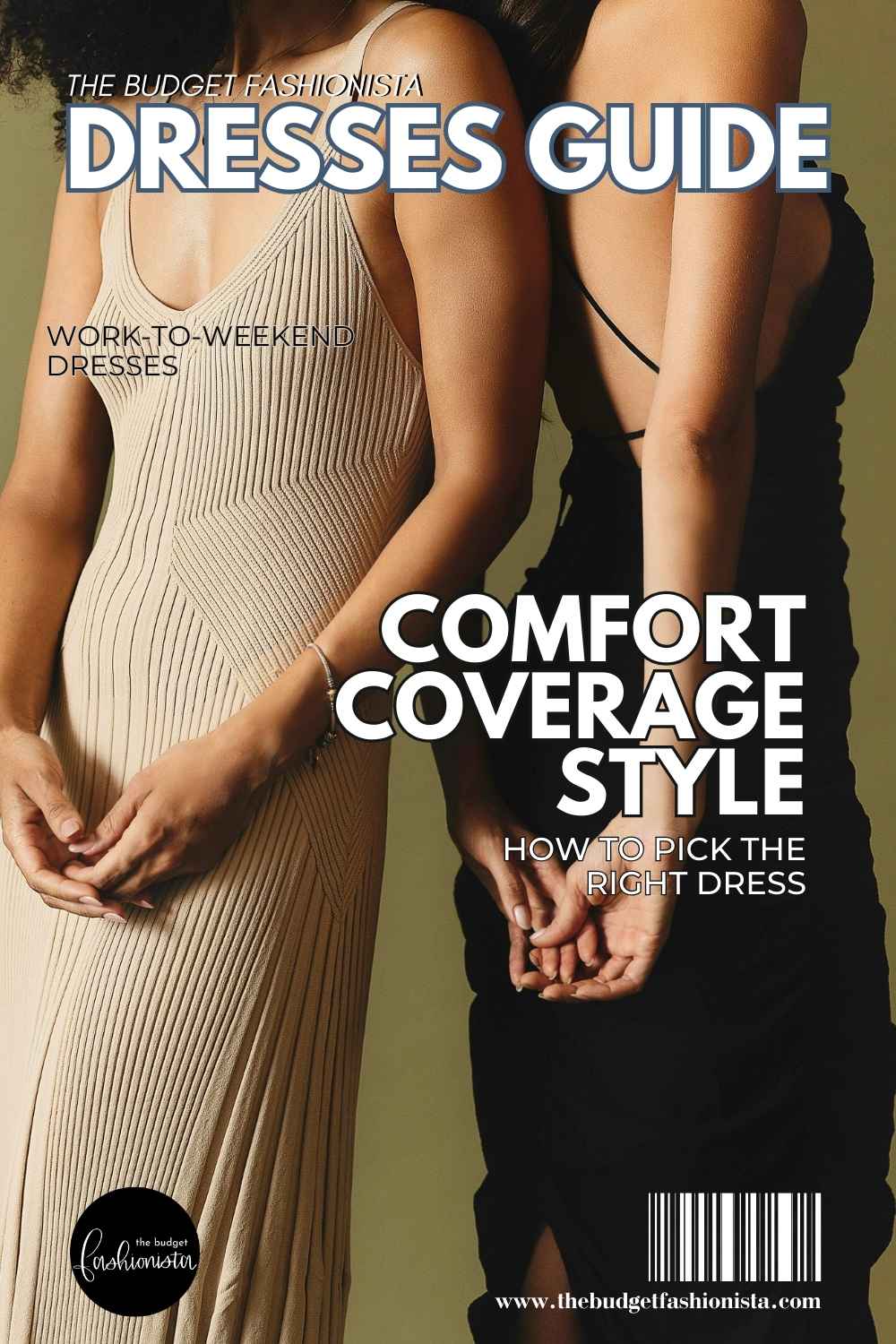
Dress lengths explained
The main dress length categories are mini, midi, and maxi.
Mini dresses
Mini dresses are playful and easy, especially when you keep the styling simple. The downfall of shorter dresses is that they can be uncomfortable at times because they ride up when you sit down. Always do the fit check before you finalize a mini dress purchase: Sit down, bend over, reach up high, and walk around to ensure you’re not feeling restricted.
Drop-waist and peplum mini dresses tend to be more forgiving than closer-fitting minis.
- When to wear. Warm weather, nights out, casual weekends, and when you want to show off your legs or a killer pair of shoes
- How to style. Sneakers for daytime, ankle boots for fall, or a blazer when you’re feeling more grown-up
- Shopping tip. If you want more cost per wear, choose a length that is below your mid-thigh.
Read next: How to revive and repurpose your little black dress
Midi dresses
Midi dresses are the wardrobe MVP. They are comfortable, polished, and easy to dress up or down. This length works for errands, work, and dinner.
The straight hemline is a classic choice for a midi dress, while a-symmetrical and shark bite hemlines are trendier.
- When to wear. Workdays, travel, date nights, transitional seasons
- How to style. Sneakers + denim jacket for casual, or ankle boots + blazer for elevated occasions
- Shopping tip. Pay attention to where the hem hits. If it’s at the widest part of your calf, the dress may not flatter. You could try a different style or have it shortened. Sometimes only an inch can change everything.
Read next: How to style a midi dress 7 easy ways
Maxi dresses
Maxis give you instant “effortless” energy. They’re comfortable, breezy, and a touch dramatic. They’re perfect when you want coverage without sacrificing style, but they can be tough to wear if you’re petite.
- When to wear. Warm weather, vacations, weekend outfits, easy coverage
- How to style. Flat sandals for summer, sneakers for casual, or a cropped jacket when you want shape
- Shopping tip. If you mostly wear flats, make sure the hem won’t drag
Dress silhouettes
Here’s the download on eight common dress silhouettes.
T-shirt dresses
T-shirt dresses are your lowest-maintenance option. They are typically one piece and made of cotton or a light polyester blend, like a t-shirt but longer. The skirt shape can either be body-skimming, like a sheath, or fuller, like an A-line.
Think of t-shirt dresses as your “jeans alternative” on days you want zero outfit math.
- When to wear. Errands, travel, casual weekends, warm weather
- How to style. Sneakers, sandals, denim jackets, crossbody bags
- Shopping tip. Check fabric weight — some t-shirt dresses are too thin — and lean into flattering necklines and practical lengths
Read next: How to wear casual dresses in winter
Shirt dresses
Shirt dresses usually button down the front and have a crisper, more structured construction than a t-shirt dress. Imagine an oxford shirt that’s long enough to cover your bum — that’s the shirt-dress vibe.
This style is a smart, classic look that requires minimal accessorizing. It’s a great option when you want an easy outfit that feels “put together.”
- When to wear. Casual offices, brunch, travel, transitional seasons
- How to style. Sneakers, loafers, ankle boots. Add a belt if you want waist definition.
- Shopping tip. Look for good buttons that close without gapping, pockets, and a fabric that doesn’t wrinkle instantly
Read next: How to wear a shirt dress
Wrap dresses
Wrap dresses are often open at the front, go on like a robe, and tie or snap at the waist. Typically, the neckline is v-shaped and the dress’s top half is form-fitting, while the bottom-half is slightly fuller. Wrap dresses are commonly lightweight, so they move and flow beautifully.
This style is feminine and classic. It flatters many body types, including the inverted triangle shape.
- When to wear. Date nights, work-to-dinner, events, photos
- How to style. Ankle boots, heeled sandals, a blazer or cardigan
- Shopping tip. Look for a secure closure and enough coverage at the neckline to feel comfortable
A-line dresses
A-line dresses are an easy yes for many wardrobes. Like the wrap dress, they are fitted at the top and gently flared through the skirt. Unlike the wrap dress, A-line dresses are closed so that you step into them or slide them on over your head. That means they are more secure in their fit but can be just as flattering. They’re also comfortable and reliably cute.
- When to wear. Everyday wear, work, warm-weather outfits, comfort-first styling
- How to style. Sandals, sneakers, flats. You can add a cropped jacket for shape.
- Shopping tip. Look or a waist seam or shape that feels defined.
Fit-and-flare dresses
The fit-and-flare dress is a more dramatic version of the A-line. They hug your top-half, have a defined waistline, and then flare out dramatically through the skirt.
- When to wear. Weddings, parties, and brunch
- How to style. Heels, flats, cardigans, cropped jackets
- Shopping tip. Look for a supportive bodice and a skirt that doesn’t feel too stiff or too flimsy.
Sheath and column dresses
Sheath and column dresses have a straighter shape from shoulder to hemline. They’re not tight, but they do follow your shape in a structured, business-like way. This style works well when you want a dress that looks “professional” without needing a lot of styling.
- When to wear. Work events, meetings, dinners, occasions that call for structure
- How to style. Blazers, structured coats, low heels or sleek flats
- Shopping tip. Look for comfort stretch, a back slit so you can walk comfortably, and a smooth fit through the hips
Sweater dresses
Sweater dresses are what they sound like — a dress constructed from a cozy knit. Well-made sweater dresses with a thicker knit are practical and cozy. They hug your shape without being too provocative.
Watch out for cheap sweater dresses, which are thin and clingy.
- When to wear. Fall and winter outfits, casual workdays, travel
- How to style. Tall boots, ankle boots, long coats, tights
- Shopping tip. Pay attention to the knit weight and look for a shape that skims rather than squeezes
Read next: How to style a sweater dress
Slip dresses
The slip dress is a slinky, lightweight that skims the body like a sexy nightgown. They usually have spaghetti straps and simple necklines.
The beauty of the slip dress is its versatility. You can play up the sexy vibe with strappy heels and a pendant. Or, you can tone things down by adding sneakers and a t-shirt underneath.
- When to wear. Date nights, events, vacations, polished casual outfits
- How to style. Chunky sweaters, blazers, denim jackets, sneakers or heeled sandals
- Shopping tip. Look or a bias cut and straps that feel secure
Fun fact: Who designed the dress Demi Moore wore in Indecent Proposal?
Bodycon and bandage dresses
Bodycon and bandage dresses are typically short and tight. They have a youthful, sexiness which makes them a classic choice for club nights.
- When to wear. Date nights, club nights, girls’ nights
- How to style. More subdued shoes, make-up, hair, and accessories work best. Balance is key.
- Shopping tip. A slightly stretchier fabric or a slit will make walking easier. Do a fit check on the length.
Read next: Dos and don’ts of wearing bodycon and How to style a summer party dress
Fabric and print vibes
Fabric and print contribute to a dress’s personality as much as length and shape. Here are some guidelines to know.
- Cotton/linen dresses are breathable and casual. They were well in warm weather and their natural wrinkles are part of the vibe.
- Knit/jersey dresses are comfortable and great for travel or everyday wear. Think of these as sweatpants in a dress.
- Satin/silky pieces are dressier and elevated. Plan on casual layers unless you’re going somewhere fancy.
- Denim/chambray dresses are durable and casual. These stand in nicely for jeans when you need to step things up.
- Solid neutrals are high value due to their versatility.
- Small prints, like leopard and other animal prints, style themselves. You might get fewer wears out of them because they’re more memorable than neutrals.
Read next: The midrange label everyone’s still talking about
Maximize your dress cost per wear
Follow these tips to find dresses that you’ll reach for again and again. To be clear, you don’t need to wear the dress daily for a year like Alex Martin did, but you should invest in pieces you’ll rewear often.
1. Buy based on what you already own
If you own:
- Sneakers, opt for t-shirt dresses, shirt dresses, and casual midis.
- Cardigans and blazers, shop for sheath dresses, wrap dresses, and midi lengths for maximum layering potential.
- Boots, lean into sweater dresses, midis, and minis with tights in darker colors and heavier fabrics.
- Primarily casual wear, you’ll get the most use from cotton, jersey, and denim dresses.
2. Do a wearability check
Think about ways you could wear the dress for at least two seasons. There are two components here: Do you already have the layers needed to make the dress wearable six months out of the year, and does your lifestyle support those outfit combos? In other words, you don’t need a cocktail dress unless you go to cocktail parties.
Read next: How to dress for a cocktail party and How to choose a cocktail dress for your shape
3. Do a fit check
You can do a fit check in the store or at home, assuming you check the return policy for your online purchases.
Try sitting, walking, and reaching in front of a mirror. Make sure you’re not showing any private bits. Check the hemline, neckline, and armhole coverage as you move around.
Read next: The best dresses for petite, plus size women
Dresses you’ll wear on repeat
To get maximum value from your dress purchases, choose a length you feel great in, a silhouette that matches your lifestyle, and fabrics that play nicely with your closet. Those are the qualities of a cost-per-wear champion.