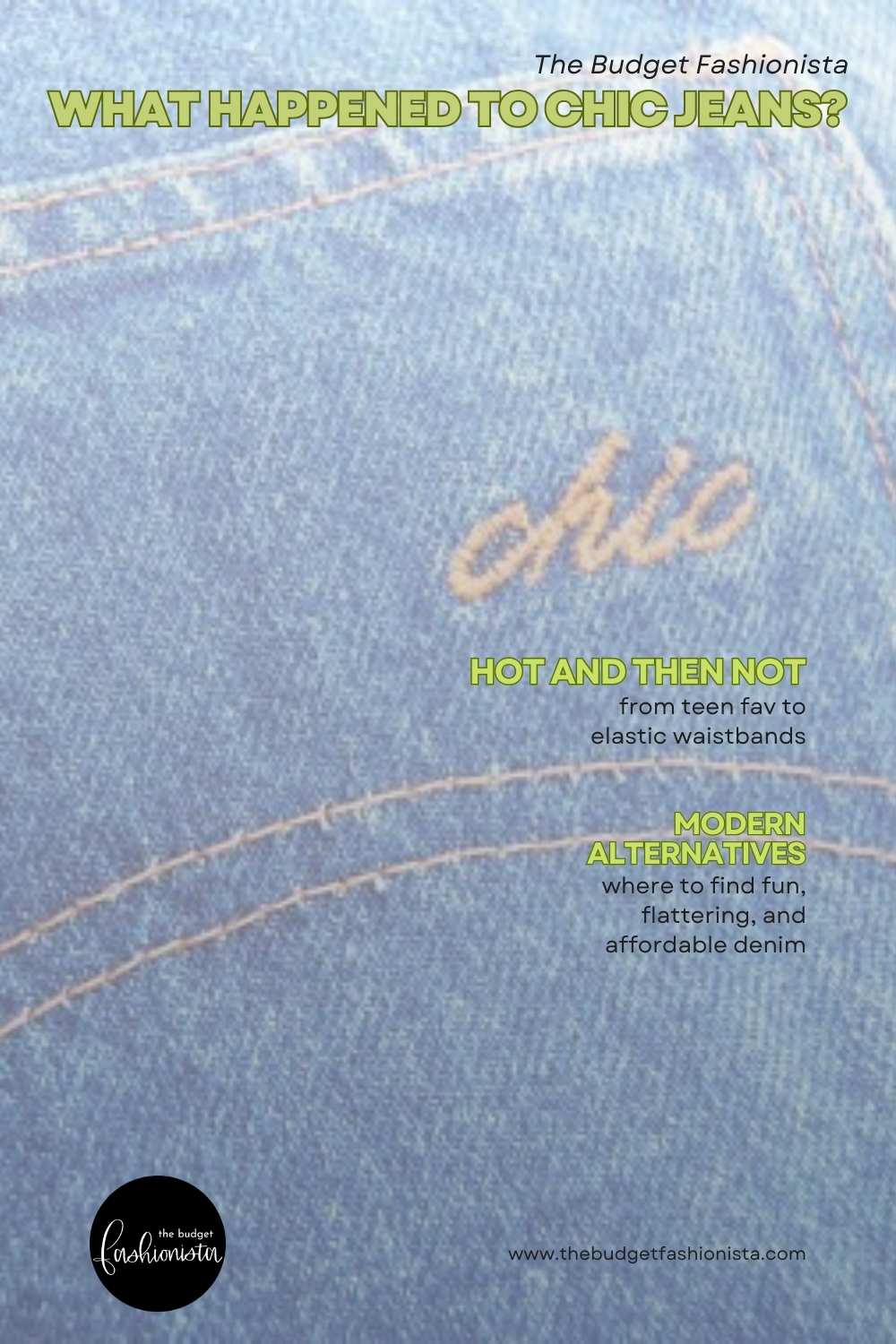
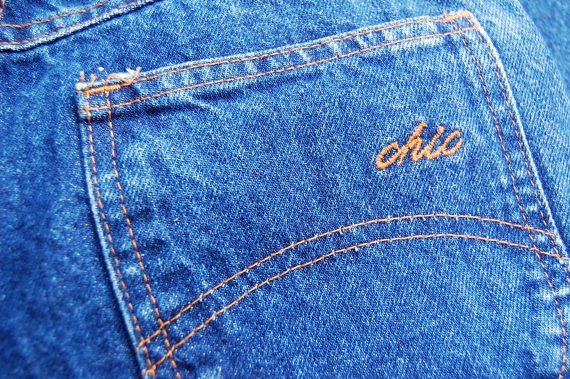
Chic Jeans had its moment in the 1980s. The brand was a favorite of teen girls who adored the high-waist, straight-leg, form-fitting denim, marked with the cursive logo on the back right pocket. It was a brand for those who desperately wanted to be cool but couldn’t afford Gloria Vanderbilts.
Sadly, the reign of Chic did not last. Here’s the story of what happened to Chic Jeans, as best as I could piece it together.
Chic Jeans, proportioned to fit
Henry I. Siegel Co. (HIS), a producer of branded jeans for department stores, created the Chic label in the 1970s. HIS specialized in reliable, affordable men’s jeans, distributed through department stores and other outlets.
Chic Jeans represented a more direct retail strategy for H.I.S. Although the brand was widely distributed through department and discount stores, it also operated its own mall locations. Wholesale brought scale, but the steady flow of teen shoppers helped amplify the label’s visibility and appeal.
The golden years
In the 1980s and early 1990s, Chic Jeans was one of the most recognized denim brands in the U.S. It could not compete with Levi’s in terms of distribution, brand equity, and global reach, but it was considered – by teenage girls at least — a credible, lower-priced alternative.
A quick demise
The cool factor for Chic Jeans flamed out fast. By the mid-1990s, mall traffic was declining and private-label jeans got more competitive. Kmart, a major distributor of Chic Jeans, struggled to remain relevant with fashion shoppers.
In 1999, HIS filed for Chapter 11 bankruptcy. Over the next decade, the company shrank through asset sales and operational closures, including Chic Jeans stores. Brand names, licenses, and trademarks were also sold off.
The VF Corp years
In 2000, VF Corporation purchased the Chic brand from Chic by HIS. It was not the company’s first foray into denim.
VF entered the denim market in 1969 when it acquired H.D. Lee Company, now the Lee brand. In 1986, VF doubled in size with the purchase of Blue Bell which included Wrangler, JanSport, and Red Kap brands. That transaction made VF Corporation the world’s largest publicly traded apparel company at that time. VF went on to acquire several other brands, including Vans, The North Face, and Nautica. The corporate timeline does not mention the Chic Jeans acquisition.
Chicjeans.com
In the mid-2010s, there was a chicjeans.com website that still listed VF Corporation as the owner. It sold things like “scooter pants” and pants with back elastic – stuff for the mature lady who prioritizes comfort above, well, anything. The homepage read, “nothing feels quite as good as being comfortable.” The collection was truly awful, particularly if you were expecting to see a new era of ultra-cool, high-waisted Chic jeans.
According to the Wayback Machine internet archive timeline, chicjeans.com likely went offline sometime in 2019. Today the chicjeans.com URL is flagged as a security risk by Firefox and Chrome. The domain name is registered to Wrangler.
Kontoor Brands
In 2019, VF spun off Wrangler, Lee, and Helly Hansen to form Kontoor Brands. Today, the Kontoor portfolio also includes Musto and Rock & Republic. Musto sells performance sailing apparel and Rock & Republic is another denim brand, sold through Amazon and Walmart.
There is no mention of Chic on Kontoor’s website, but Walmart still carries Chic-branded jeans. The selection is mostly pull-on pants, so these are presumably leftovers from Chic’s comfort-first era.
Modern Chic Jeans alternatives
In the 1980s, teen shoppers gravitated to Chic Jeans for the fit and the fun brand vibe. Parents loved the accessibility and price point. Today, that space – denim that’s affordable, flattering, and fun – is not squarely filled by any one brand. Some options that get close are:
- Old Navy tries to replicate the fun brand image but fit falters.
- Gap performs well on fit but can be more expensive.
- Levi Strauss is a solid, all-around choice but has a workhorse brand image.
- Arizona Jean Company by JCPenney has budget roots but has never been as cool as Chic Jeans was in its day.
- Quince sells quality jeans at good prices but has a more mature brand feel than Chic.
Takeaways for shoppers
The rise and fall of Chic Jeans is not a unique story. Other brands that were hot in earlier eras suffered similar fates, including Esprit, 579, and – more recently – Forever 21. Still, there are lessons to learn from Chic’s tale:
- If you find jeans you love, treat them well. The perfect pair of denim is something of a holy grail in fashion. If you find them, care for them. A brand or distributor failure could quickly make those perfect jeans irreplaceable.
- Affordable brands can struggle. Chic Jeans operated in that space above private labels but more affordable than bigger, mainstream brands. That’s a tough niche to fill. Private brands can get better and bigger brands can get cheaper. If you have heavily worn pieces in this category, it can make sense to buy backups.
- Trends move quickly. Once a brand or style is deemed uncool, people stop buying it, wearing it, and talking about it. Chic fell out of favor fast, and the same can happen with the trendier clothes in your closet – which makes them immediately unwearable. That ends up being a big blow to your cost-per-wear metrics. Opt for classic styles over trends and you’ll be richer for it.
Chic Jeans proves that popular brands can vanish and trends are fickle. Safeguard your style and your budget by investing in classic pieces you love and treating them like the finite resources they are.