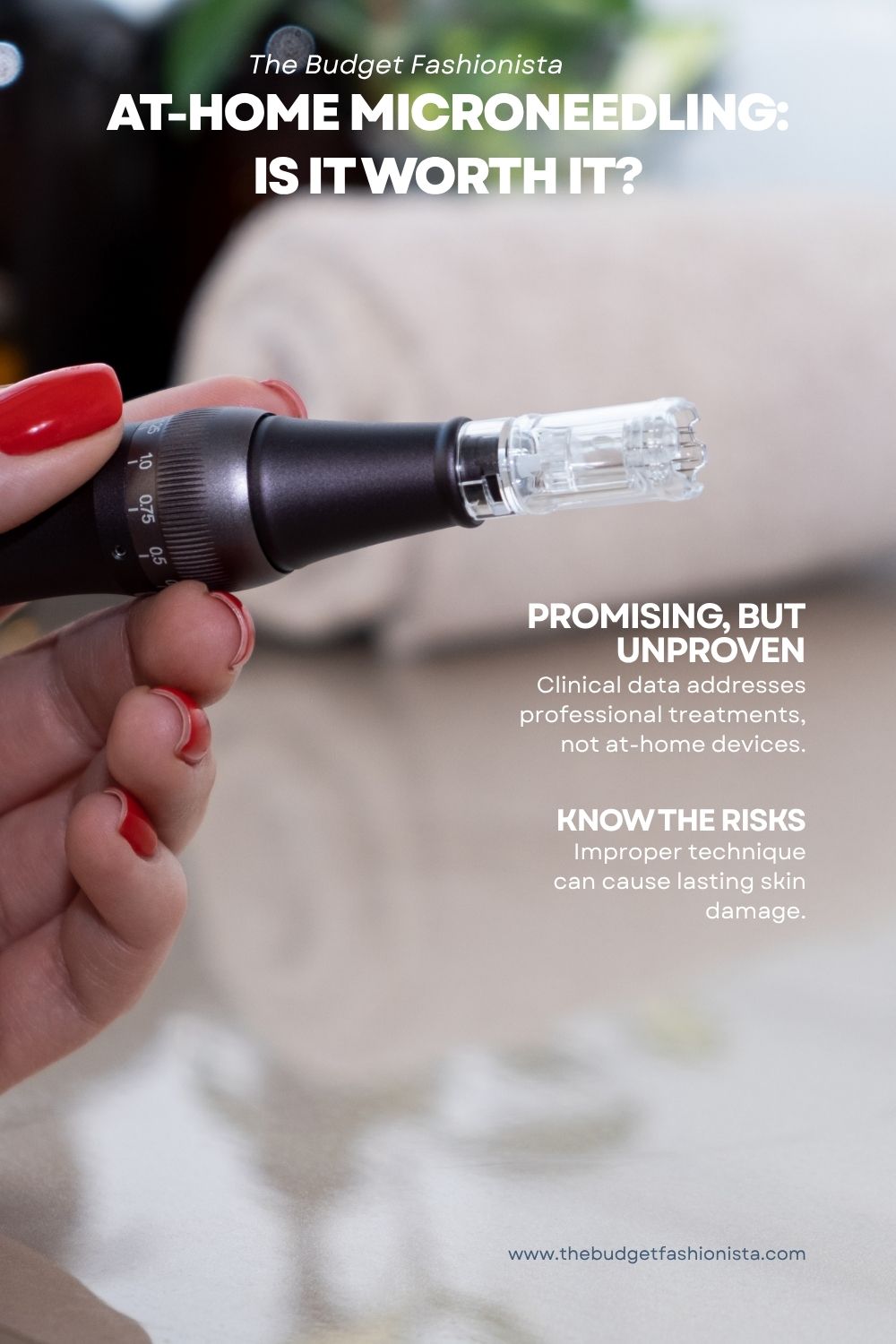
Derma rollers, stamps, and microneedling pens promise smoother skin and softer fine lines for a much lower price tag than clinical treatments. Do they work?
The short answer
Research supports the anti-aging effects of professional microneedling treatments, but there is minimal objective data on at-home devices. Without that data, we can only extrapolate from the studies completed on professional treatments and evaluate anecdotal evidence from places like Reddit. I’ve reviewed and summarized both, so you can decide for yourself.
- Clinical research supports professional microneedling for improving wrinkles and skin texture, but evidence for at-home devices remains limited.
- At-home microneedling carries risks including irritation, infection, hyperpigmentation, and scarring. Proper hygiene and technique can reduce, but not eliminate, those risks.
- Daily SPF 30+ sunscreen, consistent moisturizing, and evidence-based ingredients like retinoids offer less invasive ways to address signs of aging.
Clinical studies: Professional microneedling can be effective
A frequently cited 2018 study in the Journal of Clinical and Aesthetic Dermatology by Glynis Ablon evaluated an automated microneedling device on aging facial skin. The treatments looked like this:
- Setting: Professionally operated, automated device with a single-use sterile needle cartridge
- Needle depth: The treatment ranged from 0.5 millimeters to 1.5 millimeters deep, depending on the facial area. The cheeks received the deepest settings, while the treatment around the eyes was shallowest.
- Technique: The device was moved over the skin in circular motions until pinpoint bleeding appeared.
- Numbing: A topical numbing treatment was used 30 minutes before the treatment.
- Patients: 48 people, ages 39 to 67, most of them women
- Schedule: Four sessions, 30 days apart.
As for results, wrinkle and skin texture scores improved. Nearly three-quarters of participants (73%) reported visible improvement in lines, wrinkles, and texture. Side effects included redness, cold sore outbreaks, and one case of dry skin.
A broader 2025 review pooled 21 studies of microneedling for facial rejuvenation, covering 723 patients with an average age of 48. About 83% of patients reported being satisfied. The authors noted that there are no standardized ways to measure cosmetic results, which makes the evidence harder to compare.
Do clinical results translate to at-home use?
Yes and no. You can buy derma rollers and stamps with adjustable needles to mimic the variable approach used in the Ablon study. For example, Mon Lumiere has a derma stamp that adjusts from 0 millimeters to 3 millimeters in depth. But your results will still rely on a manual device that works differently from the automated device in the Ablon study. Professional and at-home devices are not interchangeable.
The study also included physician oversight to determine when pinpoint bleeding had occurred. Not having a pro on hand adds variability – you might not achieve pinpoint bleeding, or you might overdo it and increase the risk of side effects.
Your experience will also vary based on what you’re trying to accomplish. The study monitored wrinkles and skin texture, but microneedling is also used to lessen the appearance of scars, revive dull skin, or soften rough skin. There is less data on these outcomes.
Read next: Your guide to clinical skincare on a DIY budget
Managing the risks of at-home microneedling
The risks of microneedling, done professionally or at home, include:
- Irritation
- Infection
- Dark spots
- Scarring and textural changes
- Cold-sore breakouts
Your risks are higher if you have sensitive skin, melasma, rosacea, eczema, acne-prone skin, or a history of cold sores.
You can reduce, but not eliminate, the side-effect risks. Expert-recommended tips include:
- Using a shorter needle depth to start
- Pausing potent or exfoliating skincare ingredients or procedures for three days before and after treatment
- Sanitizing your device and hands before treatment
- Washing your face twice with a gentle cleanser before treatment
- Applying the device, whether a roller or stamp, with even pressure and without dragging
- Avoiding treatment on broken skin
- Not using microinfusion devices, which can collect and spread bacteria
- Applying a gentle serum after treatment
- Using sunscreen always
- Not touching your face after treatment
- Following the manufacturer’s guidelines on frequency of treatment
Read next: Gut instinct: How to unlock radiant skin from the inside out
What Redditors say
You can spend hours researching microneedling on Reddit. You’ll come across the full range of experiences, from successful at-home results to professional horror stories. You can browse photos of skin reactions and scarring. More positively, you can research how others keep their devices, skin, and hands clean before, during, and after treatment.
The varied experiences of Redditors point to this conclusion: At-home microneedling can be effective, but there are risks, and your results depends on your skin, the device, and your technique.
Other ways to improve skin appearance
If you’re worried about the risks, you can try other strategies to improve your skin’s appearance first – before taking the leap into microneedling. Four easy options include limiting your skin’s UV exposure, moisturizing consistently, using evidence-based ingredients, and simplifying your skincare routine.
Limiting UV exposure
Daily broad-spectrum sunscreen with SPF 30 or higher is one of the most important steps in preventing premature skin aging. Ultraviolet radiation contributes to changes in collagen, uneven pigmentation, and the development of fine lines and wrinkles.
Moisturizing consistently
Well-hydrated skin often appears smoother and more supple. Moisturizers containing glycerin, hyaluronic acid, and ceramides can help maintain moisture and support the skin barrier. When dryness is reduced, superficial lines may become less noticeable.
Using evidence-based skincare ingredients
Certain retinoids have clinical evidence supporting improvements in the appearance of fine wrinkles and some signs of photoaging. However, these products can cause dryness or irritation and are not appropriate for everyone. Some retinoids should not be used during pregnancy. Introducing active ingredients gradually and choosing products suitable for your skin type can help minimize irritation.
Read next: Treat wrinkles after 40 with these 7 OTC skincare ingredients
Simplifying your skincare routine
Aggressive exfoliation, frequent product changes, and combining multiple strong ingredients can cause irritation. A simple, consistent routine can be more effective than constant experimentation. You can at least establish a baseline that way, which helps you track the efficacy of any changes going forward.
The Budget Fashionista takeaways
At-home microneedling may improve your skin’s appearance, but there are risks. A professional treatment is safer though not entirely risk-free. Before you accept any potential negative outcomes from microneedling, consider whether daily changes to your skincare might help. Protecting your skin from UV exposure, keeping it hydrated, and using proven ingredients are gentler ways to fight the signs of aging.