High-rate credit card debt can slowly strangle your finances and prevent you from reaching your financial goals. Here’s a plan for getting out of debt that’s explained in four simple pictures.
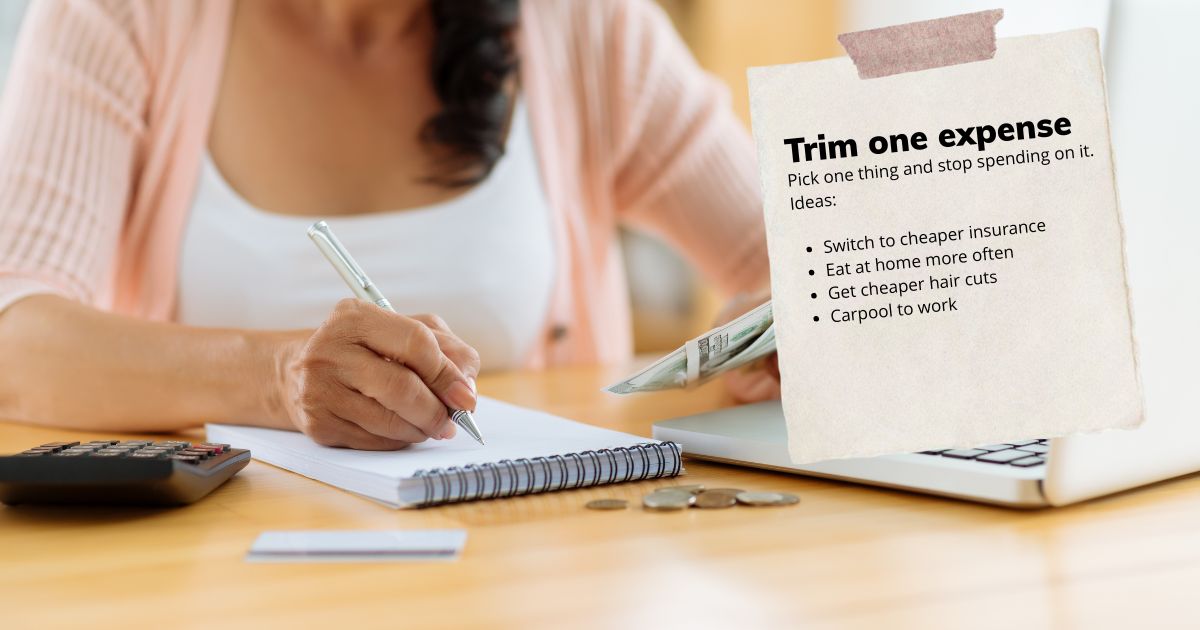
Trim one expense
Generally, high debt balances happen when your spending is higher than your income. The problem gets worse over time, because debt repayments increase your expenses. To make headway repaying debt, then, you have to create space in your budget to make larger debt repayments.
In a perfect world, you’d analyze all your expenses and carve out a detailed budget. But many of us don’t have the time or patience for that strategy.
Here’s what to do instead. Find one expense or spending category you can spend less on. Ideally, you’d aim for a few hundred dollars a month in savings, but do whatever’s possible. Change your habits so you can realize the savings without counting your pennies.
Read next: Should you refinance your debt? Pros, cons, and real numbers

Consolidate to 0%
Depending on your credit rating, you may have the option to consolidate high-rate balances to a lower interest rate — ideally, 0%. You will pay a 3% to 5% fee upfront for this service, so only go this route if you’re fully committed to seeing the plan through. If you give up early, you may end up paying more interest in the long run.
By consolidating, you keep your interest costs low and shorten the repayment timeline. If possible, aim to repay the entire balance the month before your introductory low rate expires.
Read next: Why am I broke? An expert answers
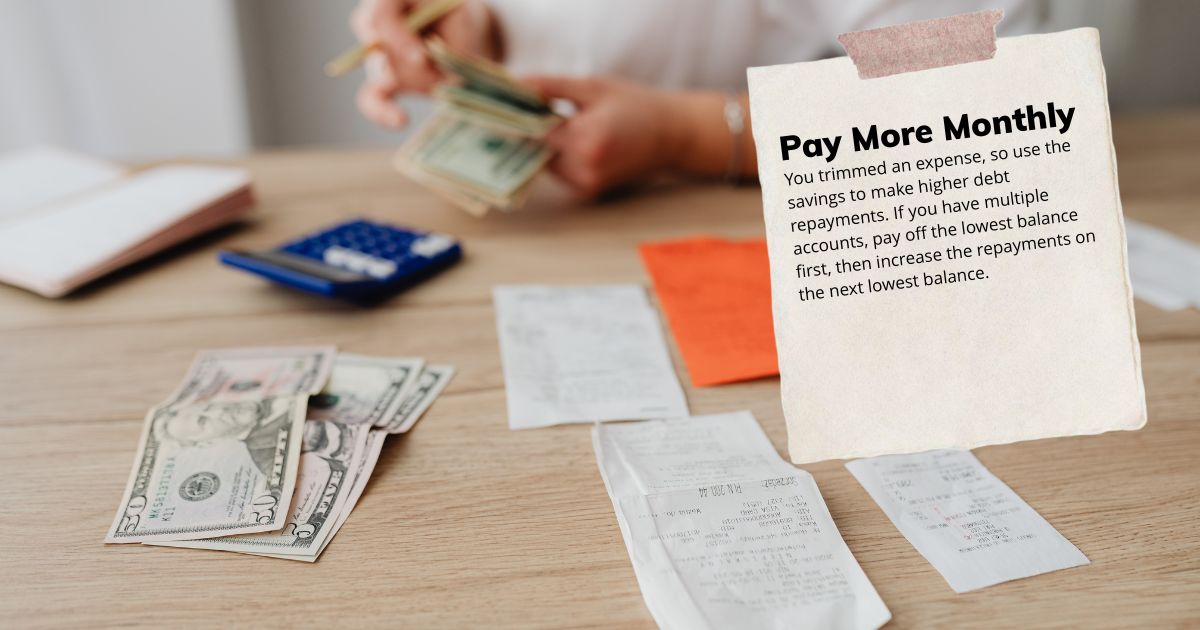
Pay more monthly
Next, use the money you saved by cutting back on an expense and dedicate that to debt repayment. If possible, set up an automated payment from your checking account on a day your paycheck gets deposited.
As long as you’re not adding more debt, the higher monthly payment should chip away at your balance. It may take some time, so you have to remain focused on the end goal of being debt-free.
If you did not consolidate your accounts, pay off one account at a time. You can start with the account that has the highest interest rate or the lowest balance. I prefer the latter, because it’s motivating to pay one off quickly.
Be debt free
Once you have the debt under control, embrace the debt-free life. You can do that by avoiding debt purchases you can’t repay immediately and using excess cash to invest in your financial future. The investment could take the form of higher retirement contributions, dabbling in a taxable brokerage account, starting a side hustle, or something else.